

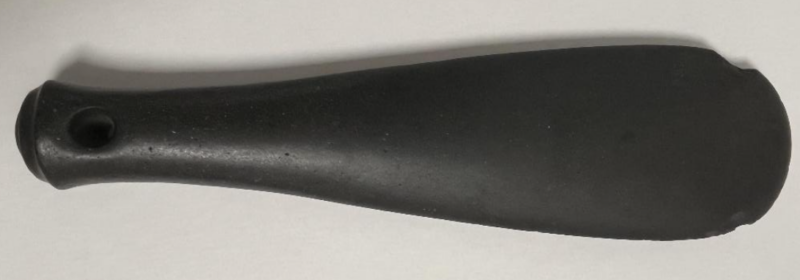
Unknown, Māori, Patu onewa, c. 16th–17th centuries. Basalt. Scripps College, Gift of Mr. Edward Nagel, 71.1.484.
What was it like to have Brent Kerehona Pukepuke-Ahitapu visit Claremont?
Last semester, I took Australia and Aotearoa New Zealand Art Histories, a seminar taught by Professor Julia Lum at Scripps College. The course focused on key topics and debates surrounding the histories and visual cultures of Australia, Aotearoa New Zealand, and the greater Pacific, from the eighteenth century to the present. In April, Māori scholar, historian, cultural practitioner, and O’Brien Distinguished Professor Brent Kerehona Pukepuke-Ahitapu visited and lectured about his research into taonga (treasured objects/things) held in collections worldwide, and how his work sheds light on the cultural legacies of the Māori and his ancestors. Brent followed his discussion with a rāranga putiputi (weaving) workshop, in which he taught us how to weave a rose using flax sourced from in and around Claremont.
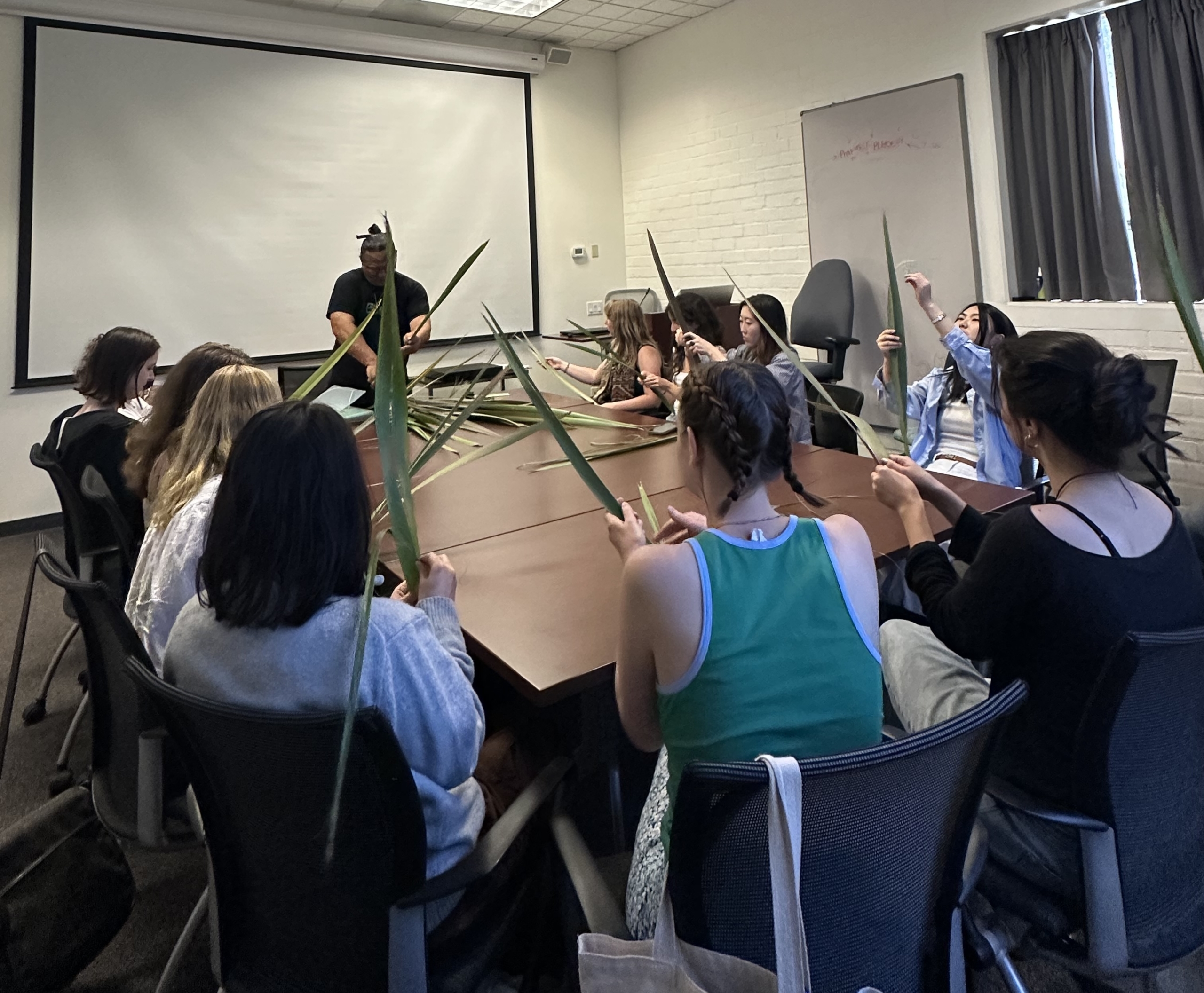
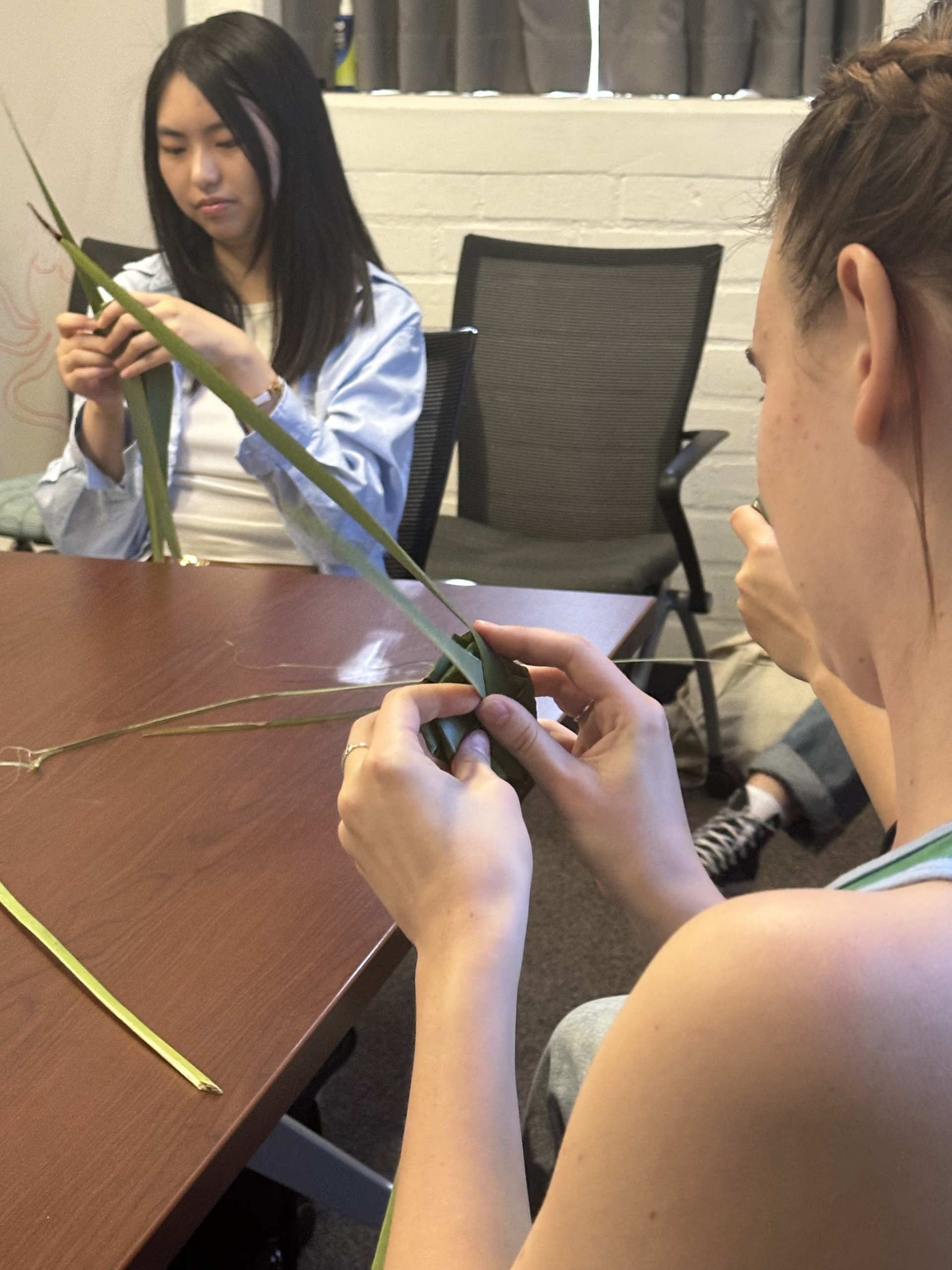
Brent began the class with a pepeha, a traditional Māori introduction that details his connections to his tribal affiliation, the land, and his ancestors. Hearing Brent speak to the class in te reo Māori (the Māori language) reminded me of how the Māori honor and preserve their traditions for future generations. Earlier in the semester, we learned about customary Māori practices, such as pōwhiri (traditional welcoming ceremony) and kapa haka (actions usually performed by groups, accompanied by chant and song). Learning about these practices’ application in international contexts, notably the Metropolitan Museum of Art’s 1984 exhibition Te Māori, highlighted Māori customs of sharing, honoring, and preserving their taonga, ancestors, and culture. Witnessing Brent’s pepeha in person was greatly moving.
After introducing himself, Brent guided our class in the ancestral, personal, and educational background behind his research and work. Brent’s projects encompass a large range of initiatives, including film, bilingual storybooks, journal articles, and historical and technical reports. His research unveils the history and significance of important Māori chiefs and taonga. When a fellow peer asked about his concerns regarding the repatriation of taonga housed in collections outside Aotearoa New Zealand, Brent explained his intentions to educate institutions about the whakapapa (genealogy/provenance), pūrākau (stories), and hītori (history) of the cultural treasures. Through his consulting work and research, he hopes to educate these institutions so that they can respectfully acknowledge and display the taonga and their respective mauri (life essence) and mana (prestige). He achieves his mission through generously providing institutions with reports outlining the history and material information about held items.
What is a patu onewa?
After the rāranga putiputi workshop, Brent discussed this object, stored at Scripps for decades. With little information about its function, purpose, and context, it had not been authenticated until Brent’s visit. When initially accessing this taonga, Brent performed a karakia (incantation), awakening it as well as acknowledging its kaiwhakairo (carver).
Holding it carefully, Brent explained that this object is a patu onewa. In te reo Māori, patu translates as “to strike,” either in relation to a striking weapon or tool for food or weaving preparation. Onewa refers to the material from which the patu is crafted. Brent described how the dark grey color points to its material origins. It was carved from basalt, a volcanic rock commonly found both on land and on the ocean’s floor. Brent moved around the classroom, sharing the stone club’s anatomy with everyone up close. He pointed to the two noticeable chips on the sides of the rau (blade), the kawhao (hole), and the three horizontal lines decorating the reke (butt or pommel). He asked us to look carefully at the kawhao. Due to the hole’s hourglass appearance, Brent indicated that the patu was produced using traditional tūwiri or pirori drills, signifying that the taonga was created in the sixteenth and seventeenth centuries. He further noted a taura or plaited phormium tenax (flax) or kiri kurī (dog skin) cord would have been attached to the weapon. However, since its arrival to Scripps, this taonga has not included the taura. After working with flax in the weaving workshop and imagining the taura, I recognized the delicate and meticulous skill that the carving and creation of this weapon requires.

What did I learn in the class?
Brent’s lectures, workshops, and evaluation of the patu onewa during his class visit emphasized all the previous discussions in this course. Hearing him speak in tea reo Māori and treat the taonga as a cultural treasure highlighted the cultural customs that encompass te ao Māori, the Māori World and worldview. Through his visit, my peers and I learned about a previously under-researched object stored at Scripps since the 1970s. Brent’s knowledge and incredible generosity allowed for this taonga to be properly acknowledged, documented, and accessioned into the Scripps College collections, where it will be stewarded by the Ruth Chandler Williamson Gallery. His visit was just one example in this seminar about Australia and Aotearoa New Zealand Art Histories that greatly impacted how I contemplate and reevaluate the visual and material histories of my local surroundings here in Claremont and beyond.
Tara Attanasio ’26 is a senior majoring in art history with a minor in economics. She is currently the Ruth Chandler Williamson Gallery’s Wilson Arts Administration Intern.
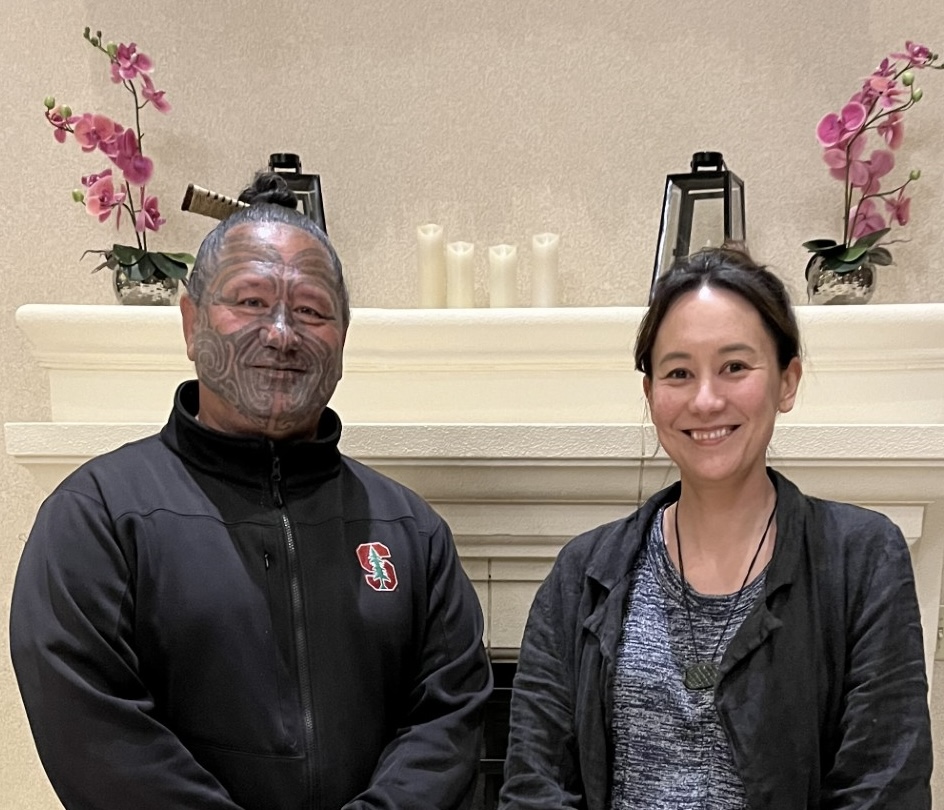
Brent Kerehona Pukepuke-Ahitapu and Professor Julia Lum. Photos courtesy of Professor Julia Lum.
Bibliography
Keane, Basil. 2013. “Pōwhiri Process.” Teara.govt.nz. Manatū Taonga Ministry for Culture and Heritage. September 5, 2013. https://teara.govt.nz/en/te-kawa-o-te-marae/page-2.
Kerehona, Brent, and Purakau Productions. 2025. “Publications.” Purakau Productions. 2025. https://www.purakauproductions.com/blank-page-2.
Smith, Valence. 2017. “What Is Kapa Haka?” Teara.govt.nz. Manatū Taonga Ministry for Culture and Heritage. 2017. https://teara.govt.nz/en/kapa-haka/page-1.
Waitangi Treaty Grounds. 2023. “Pepeha: Connecting with Identity and Land | Blog | Waitangi Treaty Grounds.” Www.waitangi.org.nz. Waitangi Treaty Grounds. June 7, 2023. https://www.waitangi.org.nz/waitangi-blog/discovering-the-power-of-pepeha.